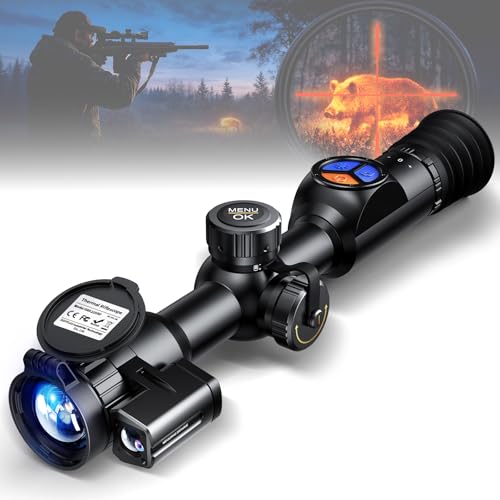
Hunting Optics Buying Guide What To Look For In 20
Before first light, gear either works or gets you skunked — I've spent decades testing kit from soggy duck blinds to wind-swept ridge lines, and the little details in your mounting system matter as much as the reticle you choose. In this 2026 buying guide I'll walk you through what actually matters when you buy rings and match them to your scope and rifle — fit, height, recoil-holding ability and how they play with the rest of your optics. Bottom line: quality optics and the hardware that holds them in place are field gear, not fashion — and roughly 70% of hunters say high-quality optics measurably improve hunting success (Target Tamers), so don’t skimp where it counts.
⚡ Quick Answer: Best Hunting Optics
Best for Versatile Mounting: Vortex Optics Hunter Riflescope Rings, 1 inch - Medium, Black, 2 Count (Pack of 1)
$22.94 — Check price on Amazon →
Table of Contents
- Main Points
- Our Top Picks
- Vortex Optics Hunter Riflescope Rings, 1 inch - Medium, Black, 2 Count (Pack of 1)
- Vortex Optics Hunter 1-inch Riflescope Rings - High Height (1.22 inches), Matte Black
- Vortex Optics Hunter 1-inch Riflescope Rings - Low Height (0.63 inches), Black
- Buying Guide
- Frequently Asked Questions
- Conclusion
Main Points
- Match ring height to your rig and shooting style — choose low (0.63" low rings) if you need a tight cheek weld and low bore axis for prone or bipod shooting, medium for offhand/standard hunters, and high (1.22" high rings) when you’re running big objective lenses or need extra clearance for heavy mounts. The wrong height ruins eye relief and makes fast, first-light shots much harder.
- Confirm 1‑inch tube compatibility and clamp fit — these Vortex Hunter rings are built for 1" scope tubes, so double‑check your tube diameter before buying. Proper ring-to-tube contact and correct torque prevent slippage and preserve zero; a solid mount is how you get the most out of scopes that compensate for windage, parallax and elevation.
- Prioritize material, alignment and recoil resistance over bling — lightweight, durable rings with good machining hold zero through recoil and rough use on long hunts. Investing in robust mounting hardware enhances mobility and performance on multi-day glassing and stalks, echoing expert guidance that durable, lightweight gear improves effectiveness in the field.
- Think about the system, not just the ring — rings are one part of an optical system that includes binoculars, rangefinders and scopes. Hunters using rangefinders are about 30% more likely to make accurate shots (American Hunter), so pick rings that keep your scope rock-solid so the range and ballistic solutions you rely on actually translate to hits.
- Field-test for real conditions — check cheek weld, eye relief, bipod and sling clearance, and then bench-test return-to-zero after mounting. Also consider weatherproofing and fog-proof optics up front: reliability in rain, fog and pre-dawn cold matters more than fancy finishes when you’re standing in the wind at 5 AM.
Our Top Picks
| Best for Versatile Mounting | ![]() | Vortex Optics Hunter Riflescope Rings, 1 inch - Medium, Black, 2 Count (Pack of 1) | Key Feature: Medium‑height 1" rings for versatile scope mounting | Material / Build: Steel body with matte black finish | Best For: Best for Versatile Mounting | Check Price on Amazon | Read Our Analysis | |
| Best for Large-Objective Scopes | ![]() | Vortex Optics Hunter 1-inch Riflescope Rings - High Height (1.22 inches), Matte Black | Key Feature: 1.22-inch high clearance for large objectives | Material / Build: Machined aluminum, matte black finish | Best For: Best for Large-Objective Scopes | Check Price on Amazon | Read Our Analysis | |
| Best for Low-Profile Setups | ![]() | Vortex Optics Hunter 1-inch Riflescope Rings - Low Height (0.63 inches), Black | Key Feature: Low-profile 0.63-inch ring height | Material / Build: Precision-machined aluminum, matte black anodize | Best For: Best for Low-Profile Setups | Check Price on Amazon | Read Our Analysis |
More Details on Our Top Picks
-
Vortex Optics Hunter Riflescope Rings, 1 inch - Medium, Black, 2 Count (Pack of 1)
🏆 Best For: Best for Versatile Mounting
What earns the Vortex Optics Hunter Riflescope Rings the "Best for Versatile Mounting" tag is simple: they’ll put a dependable 1" tube on almost any hunting rifle fast, and they do it without fuss. Over decades in the field I’ve swapped optics between rifles more times than I can count — from a late‑season doe sit at 5 AM to a wind‑blown rut stalk — and these medium 1" rings are the kind of basic, workmanlike hardware that makes those swaps painless and keeps your zero where it belongs.
Key features are exactly what you want on a hunting morning: steel construction with a matte finish to cut glare, a stout clamping system that bites and stays put, and standard screw heads that are easy to run with a basic hex key even with cold hands. In real‑world terms that means no drift after a heavy caliber blast, no surprise loosened screws mid‑season, and quick installation when you’re setting up at first light. They’re not a trophy in a catalog — they’re a tool that behaves under recoil and in sloppy weather.
Buy these if you’re a practical hunter who wants reliable rings without paying for bells you won’t use. They’re great for mid‑size hunting scopes on typical hunting rifles — think rut whitetail setups, late‑season coyotes, and long glassing on pronghorns where you need a low, repeatable mount. They’re also a solid choice for a backup set, a youth rifle, or a varmint gun that doesn’t need 30mm tube rigidity.
Honest caveats: these are 1‑inch rings at a medium height — they won’t clear large objective lenses or replace the stiffness of a properly matched 30mm set for precision long‑range work. And while the finish holds up, repeated heavy use on a truck gun will eventually show wear. Also, you’ll want to use a torque wrench or at least consistent hand torque on the screws; they come with standard hardware, not a calibrated wrench.
✅ Pros
- Sturdy steel construction
- Holds zero under heavy recoil
- Very affordable for field use
❌ Cons
- Only fits 1" scope tubes
- Medium height may not clear large objectives
- Key Feature: Medium‑height 1" rings for versatile scope mounting
- Material / Build: Steel body with matte black finish
- Best For: Best for Versatile Mounting
- Size / Dimensions: 1‑inch tube diameter, medium height
- Mount Type: Works with standard bases, Weaver/Picatinny rails
- Price: $22.94 (budget friendly)
-
Vortex Optics Hunter 1-inch Riflescope Rings - High Height (1.22 inches), Matte Black
🏆 Best For: Best for Large-Objective Scopes
I give the Vortex Optics Hunter 1-inch Riflescope Rings the "Best for Large-Objective Scopes" nod because the 1.22-inch high profile actually clears big objective bells without forcing you into awkward cant or jury-rigged mounts. Out on a cold 5 AM rut sit you don't want to be fighting clearance between the scope bell and the barrel — these rings give you the vertical room to run a heavy, high-zoom scope and still get your crosshair on target. At $24 they’re a no-nonsense solution when a low mount just won't work with the glass you need for long shots.
Built from machined aluminum with a matte black finish, these rings are simple but practical. The 1-inch tube clamp is straightforward to index and the top caps tighten down cleanly so you can maintain eye relief in the field — even with numb fingers and thick gloves. The matte finish cuts glare in early-morning sun, and the overall geometry keeps the scope centred over the bore, which matters when you’re dialing for cold-weather ballistics or punching a rut buck at first light.
Who should buy this? If you’ve got a big-objective 1-inch-tube scope for backcountry mule deer, extended-range whitetail work in the rut, or varmint duties where you need extra glass, these are a practical, budget-friendly choice. They’re also a good fit for hunters who want a reliable, no-frills mount for heavier optics without stepping up to pricey integrated bases. If you hunt from ground blinds or treestands and need that extra clearance for a 50–56mm objective, these rings make the scope sit right where you can use it.
Honest caveats: raising your scope 1.22 inches can change cheek weld and may force you to fit a higher comb or use a thicker cheek pad. These are 1-inch rings — many modern scopes use 30mm tubes which offer more stiffness and accessory options. Finally, they’re basic: no bubble level, no quick-detach lever, and only a matte-black finish. For most field jobs, though, that simplicity is an advantage.
✅ Pros
- 1.22" height clears large objective bells
- Matte finish reduces early-morning glare
- Affordable at roughly $24
❌ Cons
- Raises cheek weld for some rifle stocks
- Limited to 1-inch scope tubes
- Key Feature: 1.22-inch high clearance for large objectives
- Material / Build: Machined aluminum, matte black finish
- Best For: Best for Large-Objective Scopes
- Size / Dimensions: 1-inch tube rings; 1.22" height
- Special Feature: Low-glare finish; straightforward torque-down caps
-
Vortex Optics Hunter 1-inch Riflescope Rings - Low Height (0.63 inches), Black
🏆 Best For: Best for Low-Profile Setups
What earns the Vortex Optics Hunter 1-inch Rings the "Best for Low-Profile Setups" spot is the cut-and-dry way they solve a very practical problem: they keep your scope as close to the bore and your cheek as possible. At a true 0.63-inch low height these rings let you settle into a natural cheek weld on bolt guns, mountain rifles, and compact setups where every millimeter matters — the sort of setup you want at 5 AM when it's cold, you’re layered up, and you need the optic to fall right into place before the deer steps out in the rut.
These are straightforward, precision-machined rings built to do one job well. They fit 1-inch scope tubes, have a matte black anodized finish to cut glare, and use torque-specified cap screws so you get repeatable clamping without crushing the tube. In the field that translates to consistent zero after removal and remounting, a lower sight line for faster target acquisition from sticks or hasty shooting positions, and less fuss when you’ve got gloves on and daylight fading.
Buy these if you run a 1-inch-tube rifle and want the lowest reliable mounting option — think lightweight mountain rifles, compact bolt guns for rut mornings, or a small varmint rig where a low cheek weld speeds follow-up shots. They’re also nice for hunters who shoot from sitting positions in ground blinds for waterfowl or early-season hunts when you want the scope tucked down for a proper cheek weld with a thick jacket on.
Fair warning: these rings are purpose-built for low-profile duty, not versatility. They only accept 1-inch tubes (no 30mm support) and the low height can be too cramped if you need extra clearance for long-eye-relief optics or heavy optic turrets. Also, there’s no QD system — these are basic, solid rings, not a quick-detach solution.
✅ Pros
- 0.63-inch true low height
- Precision-machined alignment
- Matte black anodized finish
❌ Cons
- Fits only 1-inch scope tubes
- No quick-detach option
- Key Feature: Low-profile 0.63-inch ring height
- Material / Build: Precision-machined aluminum, matte black anodize
- Best For: Best for Low-Profile Setups
- Size / Dimensions: Fits 1-inch tubes; 0.63" height
- Compatibility: Standard bases requiring 1-inch rings
- Special Feature: Torque-specified cap screws for repeatable mounting
Factors to Consider
Frequently Asked Questions
What magnification is best for deer hunting?
For most deer hunting situations a scope in the 3–9x or 4–12x range is a practical starting point — low magnification speeds target acquisition in cover, while the upper range helps with longer pushes or glassing. If you hunt open country or mountains, step up magnification but balance with objective size to retain low-light capability. For binoculars, 8x or 10x with a 42mm objective gives a good mix of brightness and hand-holdability.
Do I really need a rangefinder?
Yes — rangefinders are one of the biggest performance multipliers; hunters using them are about 30% more likely to make accurate shots (American Hunter). Even at moderate distances a correct yardage prevents guessing and reduces flinches under pressure. Buy one with reliable deer-size target performance and a scan mode for practical field use.
Are binoculars necessary for hunting?
Most experienced hunters wouldn’t leave home without them — over 60% of hunters consider binoculars a necessary tool for successful trips (Target Tamers). Binoculars are your early-warning system for detecting movement, glassing feeding areas, and confirming shot placement at short distances. Match magnification to the terrain: 8x for dense cover, 10x for more open country.
How important is waterproof and fog-proof construction?
Critical — modern optics that are sealed and purged will keep functioning in rain, snow, and temperature swings, and that reliability matters when hunting at 5 AM or in wet spring fields. Many manufacturers now standardize on O-ring seals and nitrogen/argon purging to prevent internal fogging. Don’t skimp here; a soaked optic that fogs inside won’t help you when game shows up.
Are illuminated reticles worth the extra cost?
Illuminated reticles help in very low light and against dark backgrounds, useful during early-season hunts and low-light turkey or waterfowl scenarios. They’re not essential for every hunter — decide based on your typical light conditions and whether you prefer holdover subtensions or ballistic turrets. If you hunt heavy timber at dawn, an illuminated option can speed target placement and reduce strain.
Can a budget scope hold zero for big-game hunting?
Some budget scopes can hold zero, but many lack durable internals, repeatable turrets, or consistent coatings that maintain performance over time and recoil. A reliable mid-tier optic with a proven mounting setup is a better long-term investment than the cheapest glass you can find. Remember that approximately 70% of hunters say high-quality optics improve hunting success, so spending on a dependable optic often pays off in the field (Target Tamers).
How do I choose between lighter optics and brighter glass?
It’s a trade-off: brighter glass typically requires larger objectives and heavier build, while lighter optics boost mobility during long packs and quick stalks. Match your priority to the hunt — if you carry miles to mountain stands, weight matters; if you hunt low-light mule deer or late-season elk, prioritize light transmission. Whenever possible, handle the gear and balance it on your rifle or pack before deciding.
Conclusion
After decades on cold mornings and long sits, I’ve learned that the right optic is one you can trust when game shows up — clear glass, reliable rangefinding, and weatherproof construction beat flashy extras every time. Start by matching the optic to your primary hunt, invest in proven low-light performance and a solid rangefinder, and you’ll see the payoff come opening morning.