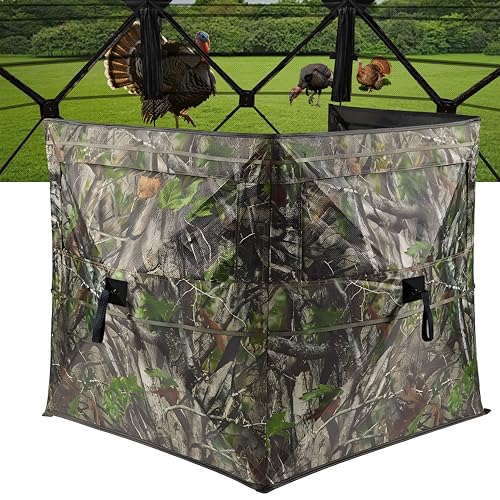
how to select ground blinds for spring turkey hunting in muddy fields and dense cover
Published April 15, 2026 • Huntingloadout
⚠️ Affiliate Disclosure: This post contains affiliate links. If you purchase through our links, we may earn a small commission at no extra cost to you. Full disclosure here.
I’ve spent more springs than I care to count sitting in the mud, waiting for a tom to strut within twenty yards of my face. If there is one thing I have learned over decades of hunting, it is that a turkey hunter’s dignity is usually the first thing lost to the elements, not his patience. When the ground is a quagmire and the sun hasn’t even crested the treeline, you need gear that sets up fast, stays low to the earth, and doesn’t scream "I am a man-made object" to a bird with eyes like a hawk. I have tested enough pop-up blinds to know which ones are built for the long haul and which ones are just expensive lawn chairs waiting to collapse in the muck.
Opt for a 270° or 360° see-through mesh design to eliminate the need for shooting ports, which often tear and compromise your concealment in tight turkey woods.
Prioritize a low-profile silhouette that sits close to the ground, allowing you to remain undetected by a tom’s keen eyes while scanning the muddy field below.
Select a camouflage pattern that mimics the specific terrain of your local spring turkey woods, such as the Tree BARK or Next CAMO G2 Green, to blend seamlessly with the early foliage.
Ensure the blind is rated for at least two to three people, providing enough room to maneuver a bow or rifle without the fabric brushing against your gear and spooking the bird.
Look for a durable carrying bag with reinforced handles, as dragging your blind through wet, thorny brush requires gear that won’t fall apart before you even reach the stand site.
Our Top Picks
Affiliate disclosure: if you buy through these links, we may earn a commission at no extra cost to you.
Spring turkey season is a game of light and shadow, and a blind that looks invisible at noon will flash like a neon sign by 6 AM. You need to understand how the sun tracks across that muddy field you are scouting, because a blind that faces east will blind you the moment the sun crests the ridge. Look for blinds with staggered, multi-directional mesh windows rather than one giant sheet of clear plastic; this breaks up the human silhouette from every angle a gobbler might approach. If you can't predict where the sun will be when you are sitting in the mud, you are just waiting to get caught.
Weight Matters More Than You Think in Spring
Unlike the frozen silence of rifle season, spring turkey hunting often involves hiking into steep, wet timber before the birds even start strutting. You are dragging your gear through thawing mud and creek bottoms, so every pound counts when you are three miles from your truck. A heavy, rigid-frame blind that requires two people to set up is a nightmare if you are hunting solo and the birds are calling from the ridge above. Stick to lightweight, collapsible designs that you can throw over your shoulder and pitch in under five minutes while the tom is still on the ground.
Camouflage Must Match the Thaw, Not the Snow
Winter camo is a lie in April; if you are sitting in a snow-cam blind in a field of green shoots and brown mud, you might as well wear a red shirt. Spring turkey blinds need to mimic the chaotic texture of new growth, dead leaves, and bare branches that dominate the forest floor in March and April. Look for blinds with 3D leaf attachments or irregular, multi-tone patterns that blend into the specific timber types in your area, like the oak-hickory mix common in the Midwest. A generic "woodland" print won't cut it when the turkeys are picking through the leaf litter right in front of your nose.
Look for "Mud-Ready" Materials and Drainage
Let's be honest: spring hunting means mud, and not just a little bit. You are sitting in a field that has been soaked by weeks of rain, and your blind needs to handle that environment without falling apart. Avoid cheap nylon that absorbs water and gets heavy; opt for reinforced polyester or canvas bottoms that resist moisture and can be hosed off later. Check the stitching at the corners and the quality of the stakes; if the ground is soft and slick, you need a blind that won't collapse the moment a goboer thumps the ground nearby.
Pitch Speed is Survival
Turkeys are smart, and they notice movement long before they see you. A blind that takes twenty minutes to assemble gives you plenty of time to spook a tom that has been feeding in that field all morning. The best blinds for spring turkey have a "pop-up" or quick-pitch mechanism that gets you covered in seconds, allowing you to settle in and wait out the initial curiosity of the birds. If you have to fight with poles and zippers while a gobbler is watching from the treeline, you have already lost the hunt.
Frequently Asked Questions
Can I use a winter ground blind for spring turkey hunting?
It is not recommended because winter camo patterns stand out starkly against the green and brown backdrop of spring. A blind designed for snow will look like a bright spot in a field of new growth, giving turkeys plenty of time to spot you before they get close. Switch to a blind with a spring-specific pattern or add natural vegetation to break up the outline.
How do I keep a ground blind stable in muddy, soft ground?
Standard stakes often fail in the slick, wet soil typical of spring fields. Use longer, wider stakes designed for soft ground, or drive them at a 45-degree angle away from the blind for maximum hold. If the ground is extremely soft, consider weighing down the corners with rocks or sandbags to prevent the blind from shifting when you move inside.
What is the best color for a spring turkey ground blind?
Look for blinds with a "leaf" or "spring woodland" pattern that mimics the specific timber and undergrowth of your hunting area. Green, brown, and tan mixes that include 3D elements work best because they break up the solid shape of the blind against the textured forest floor. Avoid solid black or dark blue, which can look like a hole in the landscape and draw the eye of a curious tom.
Do I need a blind with a floor for turkey hunting?
A floor is helpful for keeping your boots clean in muddy fields, but it can also trap odors and make the blind heavier to carry. If you are hunting in a wet, muddy field, a floor protects your gear and keeps you dry, but make sure it is made of a waterproof, easy-to-clean material. For dry fields, an open-bottom blind allows for better ventilation and easier access to your call and gun without crawling over a floor.
How far away can turkeys see a ground blind?
Turkeys have excellent eyesight and can spot movement and unnatural shapes from several hundred yards away. A well-camouflaged blind should be nearly invisible at 50 yards, but if the pattern doesn't match the surroundings, they will see it from much farther. Focus on blending the blind into the immediate environment rather than relying on distance to hide it.
Is it better to use a blind or sit in the open for turkeys?
A blind offers significant advantages by hiding your movement and scent, which is crucial when turkeys are approaching cautiously in open fields. Sitting in the open requires exceptional stillness and perfect camouflage, which is harder to maintain over a long period. For most hunters, a blind provides a more consistent and comfortable setup, especially in muddy conditions where staying still in the open is difficult.
How do I clean and store a ground blind after a muddy hunt?
Rinse off mud and debris with a hose as soon as you get home to prevent mold and mildew, which can degrade the camouflage pattern. Let the blind dry completely before storing it to avoid musty odors and fabric deterioration. Store it in a cool, dry place, preferably in a stuff sack that allows for some air circulation rather than a sealed plastic bag.
Conclusion
Spring turkey hunting in muddy fields demands gear that can handle the wet, unpredictable conditions without weighing you down or failing when you need it most. Prioritize lightweight, quick-pitch blinds with spring-specific camouflage and sturdy, mud-ready materials to ensure you are set up and ready before the birds even notice you. Choose a blind that respects the reality of the field, not just the catalog photo, and you will be sitting in the mud with a smile when that tom walks in.
Last updated:
About the Author: Dale Hutchins — Dale Hutchins has been hunting whitetail, elk, and waterfowl across the Midwest and Rocky Mountains for 25 years. A lifelong outdoorsman and archery instructor, he reviews hunting optics, camo, stands, blinds, and hunting gear based on seasons actually spent in the field.
🛒 Relevant Products for This Topic
Affiliate disclosure: if you buy through these links, we may earn a commission at no extra cost to you.