

How To Choose The Right Hunting Boots
When you're slogging through muddy river bottoms at dawn or climbing rugged hills in late October, your boots can make or break your hunt. Trust me, over decades in the field, I’ve seen more hunters struggle with gear that doesn’t perform — boots that rub blisters, don’t keep your feet warm, or just can’t handle the terrain. Picking the right boots isn’t just about comfort; it’s about ensuring your feet stay dry, warm, and ready for the long miles ahead. The right pair will keep you in the game longer, with less frustration and more focus on the task at hand.
Our Top Picks
Affiliate disclosure: if you buy through these links, we may earn a commission at no extra cost to you.


In this guide, I’ll walk you through how to evaluate your options based on season, terrain, and hunting style. Because gear that works in early season archery won’t cut it in late-season rifle hunts, and vice versa. It's all about matching your boots to the hunt, so you can rely on them when the moment of truth hits — whether that’s sneaking into a bedding area or climbing into a treestand before dawn.
Hunthor Rubber Hunting Boots for Men with 800g Insulation, Waterproof Insulated 6mm Neoprene Shoes for Outdoor Hunting (Next Camo, Size 11)
$99.99Check Price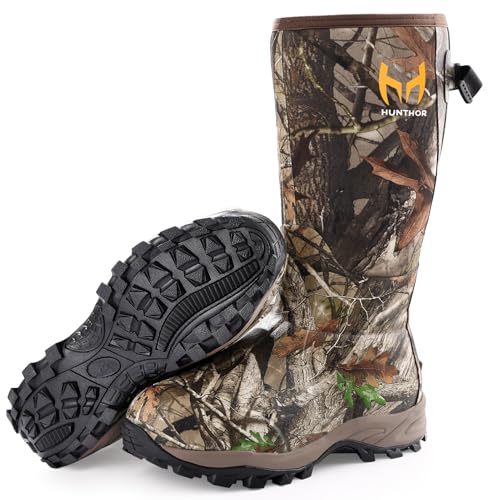
Table of Contents
1. Fit and Sizing
The foundation of any good hunting boot is a proper fit. Ill-fitting boots lead to blisters, sore feet, and loss of focus — none of which are welcome after a long morning in the woods. Always try on boots at the end of the day when your feet are swollen to get an accurate size. Wear the socks or insoles you plan to hunt in — thin wool socks for early archery, thicker for late-season rifle hunts.
Make sure there is enough room to wiggle your toes comfortably, but the heel should snugly lock your foot in place to prevent sliding that causes blisters. Walk around the store or your field testing area to see how they feel during movement; if they rub or pinch at first, they’ll only get worse in the field.
2. Material and Insulation
The outer material determines durability and water resistance. Full-grain leather is a favorite for its toughness and breathability; synthetic materials can be lighter and somewhat more water-resistant right out of the box. Keep in mind, leather requires break-in time, but it molds to your foot better over time. Synthetics tend to be more flexible, which can be helpful for quick, silent movement in deer woods.
Insulation is critical when cold weather hits. For early season hunts (spring turkey, early rifle), uninsulated or lightly insulated boots keep your feet cool and dry. During late-season or mountain hunts where snow and ice dominate, opt for well-insulated boots with a warm lining like Thinsulate or shearling. Remember, insulation adds bulk, so balance warmth with agility.
3. Thickness and Traction
The sole of your hunting boot needs to grip and handle uneven terrain. Thicker outsoles with deep treads are better for rugged, rocky, or muddy ground, providing stability and preventing slips. Look for boots with multi-directional lugs designed for varied terrain — this gives you traction on both ascending and descending shots and when sneaking around in thick cover.
While thick soles provide durability and support, they can sometimes be heavy. Seek a balance: enough cushioning to absorb shock on long walks, but not so bulky that your movement feels restricted. Test the sole flexibility in-store by twisting and bending; a flexible sole will allow more natural movement in the woods.
4. Durability and Waterproofing
Hunting boots take serious abuse, so durability is non-negotiable. Leather boots, especially treated full-grain, can last for years if maintained properly. Synthetic models often resist cracks and tears better, making them ideal for rugged backcountry use.
Waterproofing is a must — whether you’re crossing streams or hunting in rain. Look for boots with waterproof membranes like Gore-Tex or proprietary treatments. Keep in mind, waterproof doesn’t mean breathable — a waterproof boot can lead to sweaty feet if not designed properly. Proper treatment with waterproofing sprays can extend the life of leather boots and improve water resistance of synthetics.
5. Season and Terrain Considerations
Your hunting season and terrain greatly influence your boot choice. For early-season archery in light cover, breathable, lightweight boots are perfect—they keep your feet cool and agile. As winter approaches or you hunt in snow-heavy terrains, switch to insulated, waterproof options that keep your feet warm and dry through hours of trudging in trenches or snow.
In mountain terrain with loose rocks and uneven footing, boots with firm ankle support make all the difference to prevent injuries and fatigue. For swampy floodplains or thick mud, look for waterproof boots with aggressive lug patterns to maintain mobility without sinking.
6. Extra Features and Final Tips
Additional features like steel toe caps, easy-on/easy-off zippers, or removable liners can be useful in specific situations, but don’t get caught up in gimmicks. Focus on basics: comfort, fit, durability, and water resistance. Good boots should feel like an extension of your body, not a hindrance.
Finally, break in your boots gradually before the season. Wear them around the house, on short hikes, and during light yard work. This prevents surprises opening day — nothing worse than blisters in the middle of a rut stand.
Frequently Asked Questions
How do I break in new hunting boots?
Start by wearing them around the house or on short walks. Gradually increase wear time and distance. Consider wearing them with the socks you plan to hunt in to simulate real conditions. Use leather conditioner if they are full-grain leather to soften stiff areas.
Are waterproof boots really necessary?
If you hunt in wet conditions or cross streams, yes. Waterproof boots keep your feet dry longer, preventing fatigue and frostbite. However, they can sometimes trap moisture, so choose breathable waterproof models if your terrain varies in dryness and wetness.
Should I buy insulated or uninsulated boots?
It depends on your climate. Insulated boots excel in cold weather, but can be too warm in early season hunts. Uninsulated or lightly insulated boots are better for warmer weather or if you will be moving a lot to stay cool.
How important is sole grip?
Very important. Good traction prevents slips, especially on wet rocks, ice, or snow. Look for deep, multi-directional lugs and rubber compounds designed for grip in your typical hunting terrain.
What’s the best material for durable, all-condition boots?
Full-grain leather with a waterproof membrane offers a good balance of durability and weather resistance. Synthetic materials can be lighter and somewhat more resistant to tears but might require extra protection.
Conclusion
Choosing the right hunting boots isn’t just about grabbing the stiffest, most expensive pair you see — it’s about understanding what the terrain, weather, and season demand. Well-fitting, durable, and appropriately insulated boots will keep you on your feet longer, more comfortable, and ultimately more successful in the field. Take the time to select boots suited for your specific hunts, and break them in properly before opening day. Your feet—and your hunt—will thank you.
Next step? Head to your local outdoor store or trusted retailer, and try on several pairs with your hunting socks. Invest in quality boots today, and reap the rewards when you’re five miles into that late season mountain trek.


