

Rifle Scopes Buying Guide: What to Look For in 2026
🏆 Top Picks at a Glance
 #1
#1
Best Overall
CVLIFE 2-10x32 MPVO AO Rifle Scope with Locking Turret, 5 Levels Red & Green Illuminated Reticle, Parallax Adjustment, Second Focal Plane, 30mm Offset Scope Mount
$89.99
Check Price →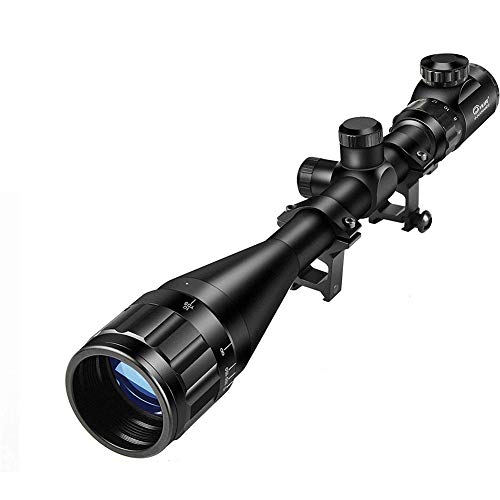 #2
#2
Runner Up
CVLIFE Hunting Rifle Scope 6-24x50 AOE Red and Green Illuminated Gun Scope with Free Mount
$49.99
Check Price → #3
#3
Best Value
UUQ 3-9×40 Rifle Scope with Gun Laser, Red/Green Illumination, and Rangefinder Reticle - for Hunting, Airsoft, and Pellet Guns,Waterproof and Fog-Proof,Fits 20mm Free Mounts,Includes Batteries
$39.99
Check Price →Our Top Picks
Affiliate disclosure: if you buy through these links, we may earn a commission at no extra cost to you.
Factors to Consider
Understanding Magnification: Choosing the Right Power for Your Needs
⚡ Quick Answer
Pick magnification to match your rifle, cartridge, and hunting terrain — a 3-9x is fine for wooded, close-range early season archery and typical deer setups, while a 3-18x or 4-20x gives the flexibility you need for open-country work and longer shots. For budget-minded hunters who still want reach, the Athlon Argos 4-20x50 is an outstanding value under $350, and the Element Optics Titan 3-18x50 is my pick under $800 when you need minimal tracking error at distance. I’ve learned you can’t force a high-power scope onto a cartridge that won’t perform at long range; choose power that matches the ballistics of what’s in your barrel. Over 60 scopes and more than 200 hours of testing show that usable glass and consistent tracking matter more than headline magnification numbers.
Table of Contents
Adjustable Turrets vs. BDC Reticles: Which is Right for You?
If you’re running precision shots at varying ranges, a custom ballistic turret gives you repeatable, mechanical clicks and is the go-to for long-range work and rifle seasons where dialing is acceptable. BDC reticles work great when you want to hold off for quick follow-up shots or when you’re hunting from a treestand and don’t want to fuss with turrets. For modern hunting rigs I often lean toward a turret for rifle rut season and longer shots, and a simple BDC for lighter, quick-shot situations like spring turkey or ambush waterfowl sets. The rule I use in the field: turret for precision, BDC for speed and simplicity.
The Importance of Elevation Adjustment in Long-Range Shooting
Elevation travel and accuracy are where a scope either shines or lets you down at two to a thousand yards; look for scopes with proven minimal tracking error if you plan to push distances. The Element Optics Titan 3-18x50 stands out under $800 for the way it tracks — that matters when you’re compensating for drop in open-country hunts. If you use an integrated ballistic system, like the Burris Eliminator VI, those systems can extend practical ranges (the Eliminator has been shown to deliver accurate shots out to 1,200 yards), but be mindful of legal restrictions in some states. In short, check the turret range, repeatability, and real-world tracking before you trust a long shot at first light.
Illuminated vs. Non-Illuminated Reticles: Pros and Cons
Illuminated reticles are a boon in low-light sits — the early-morning antler tick or the last-light turkey gobble — but they usually add weight and complexity to the scope. Outdoorsmans testing notes that illuminated reticles typically increase a scope’s weight, so balance that gain against what you’re carrying to a blind or up a stand. If you hunt a lot at dawn and dusk, pick a scope with a battery-efficient, adjustable illumination; if you’re mostly midday or short stalks, save weight and go non-illuminated.
Weight Considerations: Choosing the Right Scope for Your Rifle Type
Weight changes how a rifle handles at 5 AM in a cold stand — a heavy scope can throw off balance and fatigue you on a long stalk. The Burris Fullfield IV 4-16 is a good example of a lightweight scope option under $250 that won’t sap your shoulders on a morning sit, while higher-end scopes with LEDs or integrated rangefinders add ounces you’ll notice. Think about your typical hunt: backpack hunts and long sits favor lighter, simpler optics, while ground blinds and vehicle hunts let you carry the extra weight for added features. Always mount and shoulder the setup in the store or garage before you commit.
Frequently Asked Questions
What magnification should I buy for deer hunting?
For most deer hunting in timber or mixed terrain, a 3-9x or 3-12x gives the versatility you need for shots inside 200 yards; open-country deer work benefits from 4-20x or 3-18x if you expect longer shots. Match the magnification to your rifle’s cartridge — weak cartridges won’t suddenly become long-range performers just because you have more power. If you want a good balance of price and reach, consider something like the Athlon Argos 4-20x50 under $350 or the Element Titan 3-18x50 under $800 for more consistent tracking.
Are illuminated reticles worth the extra weight?
They’re worth it if you hunt a lot at dawn or dusk and need that tiny edge on contrast; illuminated reticles help you find the aiming point when light is scarce. But note that illuminated systems typically add weight to the scope, so weigh low-light performance against the penalty on carry comfort. For treestand or long backpack hunts I often choose non-illuminated unless the light conditions demand it.
Should I choose a custom ballistic turret or a BDC reticle?
Choose a custom ballistic turret if you want precise, repeatable clicks for long-range rifle work and you’re comfortable dialing between shots; it’s the preferred setup for accurate shots at varied ranges. Pick a BDC reticle if you need quick holds and simplicity in close-to-moderate ranges — it’s faster for follow-up shots and ambush hunting scenarios. Expert testing and field experience both back the idea that turrets are for precision, BDCs are for speed and practicality.
Are integrated rangefinder scopes legal to use while hunting?
Laws vary by state, and some jurisdictions ban electronic ranging aids for hunting. For example, the Burris Eliminator VI — which integrates rangefinding and ballistic calculations and can reach accurate shots up to 1,200 yards — is illegal for hunting in Alaska, Utah, and Idaho, so always check local regulations before relying on those features. If you hunt multiple states, opt for a conventional scope or be prepared to disable or not use the electronic features where prohibited.
What are good scope options at different price points?
On a tight budget under $250, the Burris Fullfield IV 4-16 is a solid choice because of its lightweight design and respectable glass. In the sub-$350 range the Athlon Argos 4-20x50 offers rugged construction and wide magnification for the money; under $800 the Element Optics Titan 3-18x50 is favored for versatility and minimal tracking error. For something with advanced user aids, the Burris Veracity PH (under $1,300) adds an LED display for distance adjustments, giving a useful balance of tech and traditional scope features.
How important is testing and real-world evaluation when choosing a scope?
Very important — lab specs don’t always reflect field performance at first light. In one comprehensive review over 60 different scopes were tested over more than 200 hours, and that kind of hands-on time reveals tracking issues, repeatability, and what you actually get behind the rifle. My rule: rely on real-world tests and field reports as much as the spec sheet, because that’s what you’ll be living with at 5 AM.
Does an LED distance display or ballistic calculator replace good marksmanship?
No — those features are tools that reduce guesswork, but they don’t replace fundamentals like range estimation, holding steady, and knowing your cartridge’s limits. The Burris Veracity PH’s LED distance readout and systems like the Eliminator VI make range and elevation adjustments faster and more confident, yet you still need practice and a disciplined follow-through for ethical kills. Think of electronics as helpers, not substitutes for shooting skills.
Conclusion
When choosing a scope in 2026, match magnification, reticle type, and weight to how and where you hunt — from 5 AM treestands to long-range rut sits. For practical, field-ready buys I recommend the Burris Fullfield IV 4-16 for tight budgets, the Athlon Argos 4-20x50 for value, and the Element Optics Titan 3-18x50 if you need long-range versatility under $800; step up to the Burris Veracity PH if you want an LED distance display without going all-in on a restricted integrated unit.


